The Truth In Your Stars: Personal Astrology for Fresh Insight

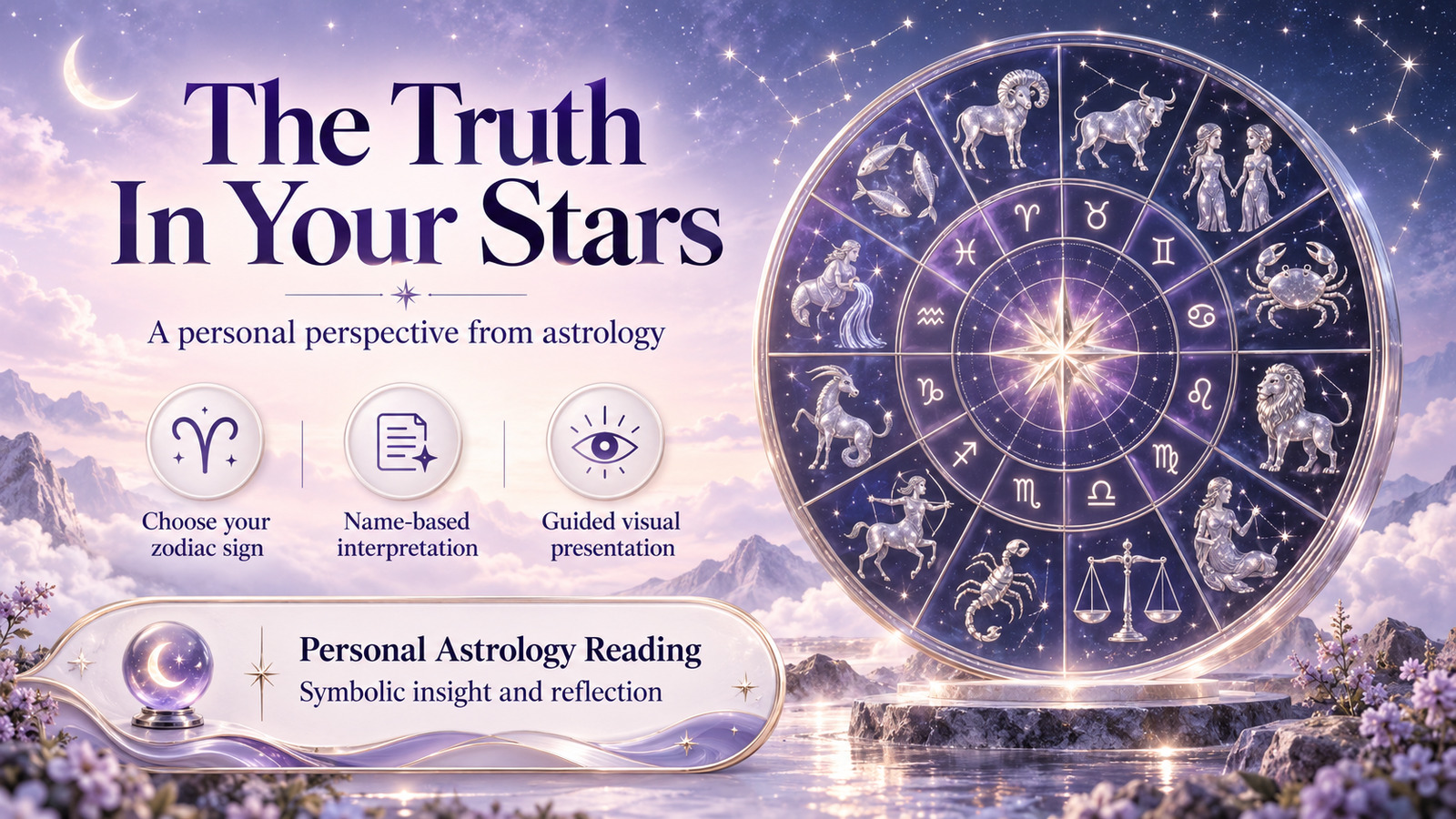

If daily horoscopes leave you wondering how any of it relates to your own life, a guided reading offers a more personal place to begin. The Truth In Your Stars starts with your zodiac sign and name, introducing themes you can consider alongside your relationships, hopes and everyday choices.
You enter through a choice of twelve zodiac signs, then follow a narrated, illustrated presentation addressed to you. The opening experience connects sign-based personality descriptions with interpretations of the letters in your name, giving astrology-curious people a straightforward way to engage with symbolic ideas.
Quick Overview
| What it is: | A personalized online astrology reading experience presented for entertainment. |
| How it works: | You select your zodiac sign and provide your name as the guided presentation unfolds. |
| Who it’s for: | People interested in astrology, symbolic interpretation and personal reflection. |
| Key features: | Zodiac-led introductions, name-based interpretations and a narrated visual presentation. |
Your Sign Opens the Conversation
The starting point is familiar: choose your zodiac sign from Aries through Pisces. The presentation then welcomes you by sign before asking for your first name. This staged introduction gives the experience a clear direction, with each step building on information you have already supplied.
That format suits a moment when you want to settle into a reading. You can follow one continuous presentation, listening to its descriptions and considering which ideas connect with your own experiences. The visual setting and spoken delivery are central parts of its appeal.
The zodiac selection provides a clear starting point for an experience that unfolds through successive personal prompts.

Your Name Adds Another Symbolic Layer
The Truth In Your Stars also introduces the idea that the letters in your name carry personal meaning. In the preview, the presentation moves between zodiac personality themes and name-based interpretation. This combination gives the experience two familiar reference points: the sign you identify with and the name you use every day.
You might use those descriptions to think about how you see yourself, how you relate to other people or which qualities you would like to express more often. For example, a passage about warmth could prompt you to recall a recent conversation and consider whether you communicated the care you intended. This optional exercise uses your own experiences to give the description context.
The next stage asks for a surname and email address to continue. Knowing that sequence helps you understand the experience before beginning: it develops through personal-information prompts.
Name-based interpretation adds a second symbolic lens to the sign-based introduction, creating more material for personal reflection.
What Makes the Guided Format Appealing
For someone who enjoys astrology as a personal interest, the confirmed features offer several practical attractions:
- Begin with familiar information: your zodiac sign and name provide an accessible entry into the experience.
- Follow a guided sequence: the presentation introduces its ideas progressively, giving you a clear next step.
- Engage through words and images: narration and celestial visuals create an immersive setting for the reading.
- Consider personally relevant themes: the introduction touches on personality, relationships and aspirations for happiness.
The most useful approach is to bring one question of your own. Perhaps you want to think about how you respond to affection, what makes you feel understood or which hopes keep returning to mind. A specific question gives you something concrete to consider as the presentation develops.
Turn an Interesting Passage into a Journal Note
A reading can become part of a quiet reflection session at home. Keep a notebook nearby and write down an idea that catches your attention, followed by an example from your own life. This is an optional way to engage with the material; it does not require the product to supply a workbook or planning system.
Try two short headings: “What matters” and “Next step.” Under the first, describe a value or relationship quality you care about. Under the second, choose an action within your control, such as making time for a conversation or returning to a neglected interest. Your own observations give the exercise its practical substance.

A useful reflection connects an interesting description with a real experience and an action you can choose for yourself.
Understand the Experience You Are Choosing
The official website identifies the service as entertainment, and its terms explain that different users may receive similar information. Personal details shape the presentation, but they do not establish that every description is exclusive to you. The James Seabrook name used in the experience is also identified as a pen name.
Enjoy the reading as symbolic exploration, with room to agree, disagree and form your own interpretation. Claims about changing luck, love or wealth express the promotional theme; they do not establish guaranteed changes in your circumstances.
Give Your Curiosity a Personal Starting Point
If you enjoy astrology but want a clear way to begin exploring it, The Truth In Your Stars brings your zodiac sign, your name and a guided presentation into one experience. Its appeal is the invitation to pause, consider familiar personal themes and discover which ideas spark your curiosity. That combination makes it an engaging next step for an astrology-inspired moment of self-discovery.